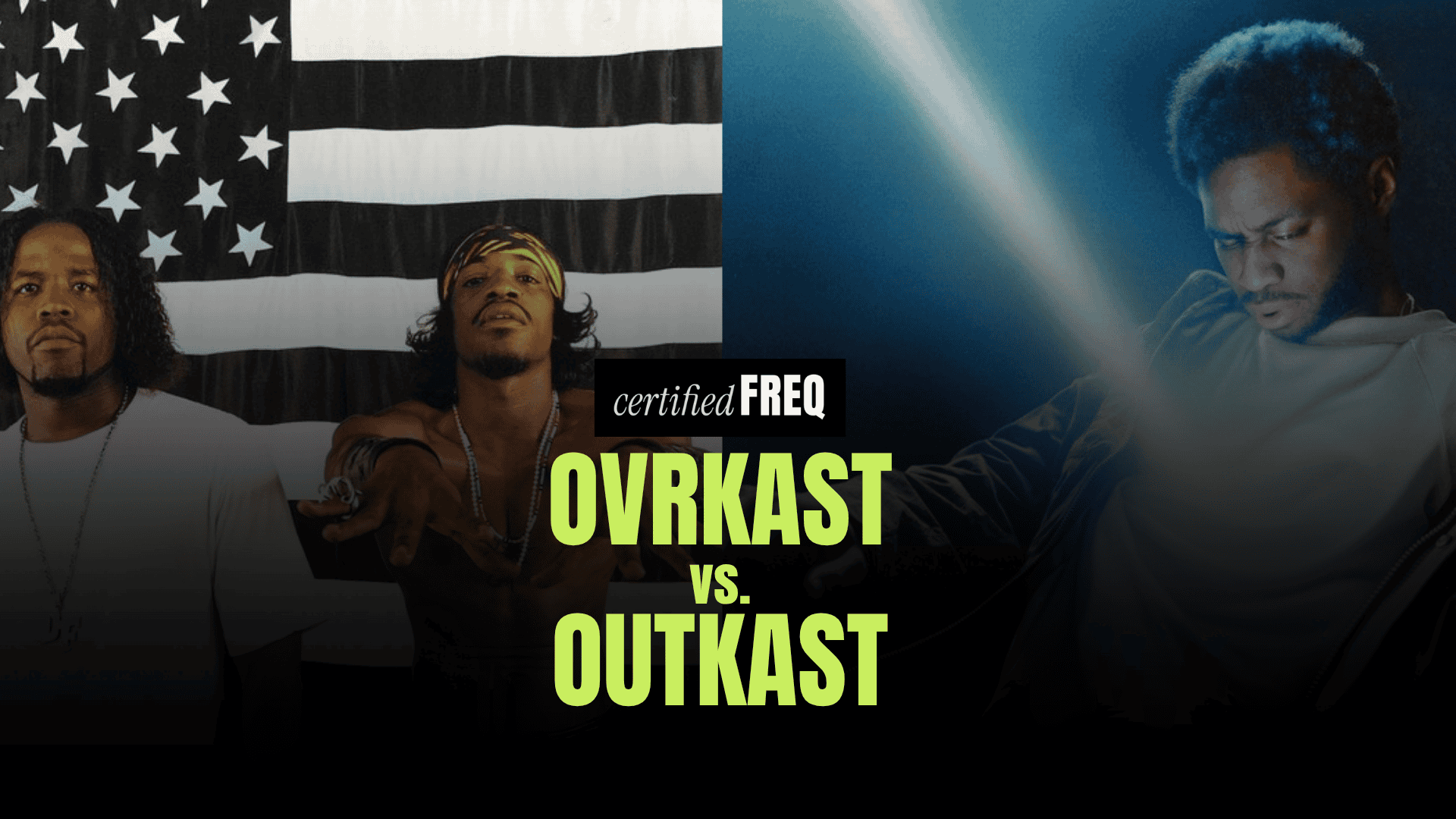
Silas Wilson has always enjoyed the rain. He grew up in East Oakland, and on gray afternoons he would get home, draw, and go digging for old records to chop into beats. Staying in was half the appeal. When the beats needed a name, he looked out the window.
“I always loved rain and Oakland hoodie weather,” he told KQED in January 2022. “When it was raining I could just be inside, drawing, looking up music. That’s where the idea of Ovrkast. came from. I cherish that feeling. That combination of rain, music and calmness all go together. It helped me with my anxiety.”
On 16 September 2026, the company that holds Outkast’s trademarks asked a federal judge in Atlanta to take that name off him permanently, destroy every piece of merchandise carrying it, and hand over the money he made while he was using it.
The case is High Schoolers, LLC v. Silas Wilson, number 1:26-cv-05345 in the Northern District of Georgia, before Judge Eleanor L. Ross. High Schoolers LLC is the company André 3000 and Big Boi hold Outkast’s trademarks through. The complaint arrives with seven exhibits and demands a jury.
The Name Is Attached To Six Years Of Other People’s Records
Wilson was in high school when he started making beats. In 2015 he transferred to Bunche Academy in West Oakland, where a music production teacher he calls Mr. Holiday ran a studio and kept asking him at lunch whether he wanted to make something. Eventually he went in. The teacher opened FL Studio and showed him how to chop a sample and put drums under it.
“I think he knew that that’s all I wanted,” he told Passion of the Weiss in an interview published in February 2021. “The basis of what I wanted to do was that, and so he showed me how to do it.”
He sold his first beat the same year, 2015, to Mavi, a Charlotte rapper he knew through mutual friends and who was starting out around the same time. By 2016 Wilson was posting on Bandcamp and SoundCloud. In 2017 he co-founded the Oakland collective Lo-Fiction with Demahjiae and Nimsins, which got its first real attention when Pete Rock shared its work.
Then the placements. In November 2019 he produced “EL TORO COMBO MEAL” on Earl Sweatshirt’s EP Feet of Clay. He played the instrumental for Earl in a studio session that year and Earl let it pass, so he emailed it over afterwards. Earl recorded on it. Mavi had rapped over the same beat separately. The two verses were joined into one track.
By November 2023 he had gained enough traction to earn him two songs on Drake’s For All the Dogs: Scary Hours Edition, “Red Button” and “The Shoe Fits”, both alongside Lil Yachty.
Five projects have gone out under his own name since 2020, from the mixtape Try Again that year to While The Iron Is Hot in 2025.
That is what the name is carrying. Not a logo. Credits on other people’s records, six years of write-ups, stages he has stood on, and shirts that people bought because they wanted him to keep going.
This Started As A Deal, Not A Lawsuit
Outkast’s lawyers reached Wilson in 2025. The talks ran into 2026 and produced a settlement with one central term: he would retire Ovrkast and record as Overkxst instead, across streaming, social accounts, his website, merchandise and marketing.
Currently, he writes his name with a full stop on the end, and the outlet KQED and his streaming profiles all carry the stop. The lawsuit does not, and neither does his Wikipedia entry or any of the other outlets I have seen covering it. Search for him today and you get at least two spellings of the same man, which is its own small comment on a case about names being confused.
Even the replacement name is printed differently in different places. AllHipHop, which broke the filing and quotes the complaint directly, has it as OVERKXST.
Then a date to do it by, and the sources do not agree on which date. AllHipHop puts the compliance deadline at 15 July 2026. Vice puts it at 15 June 2026. That date is the hinge of the breach claim, so the gap is not a detail, and until the complaint itself is public neither version can be called the right one.
Whichever it was, it passed, and Wilson kept releasing as Ovrkast. High Schoolers says he then stalled on the paperwork and put forward two replacement names the company had already turned down. Those two are not Overkxst, which is the name it approved, and no published account of the complaint says what they were. It makes you wonder if it is possible this is where the variant “Ovrkast.” came from.
A breach notice went out on 5 August 2026 giving him until 11 August. That passed as well.
“Defendant continues to use the OVRKAST mark with knowledge of Plaintiff’s rights,” the complaint says.
It is the second name case the company has brought in two years. In August 2024 it sued a masked EDM duo performing as ATLiens, the title of Outkast’s 1996 album, arguing the word did not exist before Outkast made it. AllHipHop reported that case settled in February 2026 on undisclosed terms.
What The Company Is Actually Asking For
High Schoolers is asking for three things, and each one takes something different from Wilson.
- A permanent injunction. A court order barring him from using OVRKAST, or any name close enough to be confused with it, anywhere, for good.
- Destruction of the merchandise. Every shirt, poster, package and marketing item already printed with the name, destroyed. Not sold through at a discount, not relabeled, not donated, not boxed up until the case ends. For an independent artist, merch is not a souvenir counter. It is stock he has already paid a printer to make.
- The money. The profits he earned from records and goods carrying the name, plus damages, plus the company’s own legal costs. The filing alleges the conduct was deliberate, describing “an intentional, willful, and malicious intent”, per Consequence. That allegation is what lets a trademark plaintiff reach for profits and fees instead of only an order to stop.
Three claims sit underneath those asks:
- Trademark infringement. Outkast’s name is registered, and the company says Wilson’s is close enough that ordinary buyers could think the two acts are connected.
- Unfair competition. Separately from the registration, the company says he traded on goodwill Outkast spent thirty years building, and that the public was misled.
- Breach of contract. He signed a settlement agreeing to stop, and the company says he did not do what he signed.
The Evidence Is An Interview He Gave
The strongest thing in the filing is not a sales figure or a chart position. It is Wilson talking to a magazine.
High Schoolers cites a 2025 Rolling Stone feature in which Wilson was asked about the reaction his name gets.
“The worst thing I get is like, ‘The n—a think he Outkast.’ It’s like, ‘No, bro. I wasn’t even thinking about Outkast.’ Mad n—as do that s—. They read Ovrkast as Outkast.”
He was describing a nuisance. The complaint reads it as an admission.
Trademark cases turn on likelihood of confusion. The question is not whether Wilson copied anything, it is whether ordinary listeners mix the two up. Here the defendant described that confusion himself, in print, unprompted, a year before anyone sued him. Whatever his lawyers argue about intent, they have to answer his own account of it.
He Answered On Instagram, Not On The Docket
On 22 September Wilson posted a screenshot of the news, tagged both members of Outkast, and wrote “I thought it was love (yes, this is real)”. In his own comments he put the case for himself in a line: “I’m jus a young black man trying to get ahead.”
Nothing has been filed on his behalf, and the public docket does not show that he has been served. On 17 September, the day after filing, High Schoolers’ lawyers filed a request that he waive service, which is the ordinary way of asking a defendant to accept the papers without a process server at the door.
That changes the clock, and in a legal fight the clock is worth being precise about, because two different ones could be running here. If Wilson is formally served, he has 21 days to answer. If he returns the waiver instead, Rule 4(d)(3) of the Federal Rules of Civil Procedure gives him 60 days from the day the request was sent. On that second route his answer would not be due until the middle of November.
A New Name Would Not Empty The Room
Changing a stage name, while tedious, does not mean starting from zero. Changing the name on the platforms is often as simple as filling out a form. On Spotify the artist does not typically fill it in himself, because the name arrives with the music. The company’s guidance for artists puts it plainly: “You can’t manually change your artist name on Spotify. Your artist name comes from the metadata your label or distributor sends us.” The request goes through whoever distributes his releases, the catalogue is redelivered under the new name, and it is the same profile either way. Followers and listening history stay where they are. Apple routes it the same way, telling artists to work with your label or distributor to submit corrections. A YouTube channel can rename itself twice in any 14 days, though it loses its verification badge when it does.
None of that is hard. It is tedious, because it has to be done everywhere at once, and with a court order sitting on the desk it is a week of admin rather than a crisis.
So the expensive part is not the profile. It is everything sitting outside it.
The producer credits on Feet of Clay and on two Drake songs are printed on somebody else’s release, and renaming his own page does not rewrite them. Six years of reviews, interviews, liner notes and playlist copy keep pointing at the old identity, and so does every listener typing it into a search box from memory. On YouTube the old handle is held for 14 days and then released for anyone else to claim. Filling in the form is easy. Being found afterwards is the work.
The Remedies Were Built For Companies
Outkast is not doing anything unreasonable. A famous mark that goes unpoliced gets weaker, and the two names really are close. OUTKAST and OVRKAST are seven letters each with two of them different, the K sitting in the same slot, and a v that reads as a u at a glance. Wilson then told a national magazine that people read one as the other. That is a real case, brought by a company entitled to bring it.
He also signed a settlement acknowledging that he would stop using the name by a specific date. Yet, the date came and went, and then a second one did.
What is worth sitting with is the difference in equipment. High Schoolers filed with three named lawyers, seven exhibits and a jury demand. Wilson answered on Instagram. Trademark remedies were built for businesses defending assets, and they land the same way on a producer who took his name from Oakland weather. Destroy the merchandise. Hand over the profits. Pay the other side’s fees. Those are the standard asks, and that is the point. The standard was set by what a company can absorb.
The useful part for everybody else sits upstream of all of it. A search of the federal trademark register is free and takes an afternoon. Do it before the name is on a release, a credit and a stack of shirts. Skip it, and six years in you could find the question of who owns your name being answered by a judge in Atlanta, with no vote of your own.
K. Allen, “Outkast Wants Ovrkast’s Name, His Merch And His Money,” certifiedFREQ, 25 September 2026. https://certifiedfreq.com
Sources
- Justia Dockets, High Schoolers, LLC v. Wilson, No. 1:26-cv-05345 (N.D. Ga., filed 16 September 2026)
- Justia Dockets, High Schoolers, LLC v. ATLiens Touring, Inc., No. 1:24-cv-03690 (N.D. Ga., filed 20 August 2024)
- Cornell Legal Information Institute, Federal Rule of Civil Procedure 4
- Cornell Legal Information Institute, Federal Rule of Civil Procedure 12
- AllHipHop, Grouchy Greg Watkins, “Outkast Sues Ovrkast After Rapper Admits Listeners Confuse Their Names,” 22 September 2026
- Consequence, Travis Bland, “OutKast File Lawsuit Against Ovrkast, Claiming Malicious Intent With His Chosen Name,” 22 September 2026
- Vice, Dan Milam, “Outkast Sues Ovrkast After Rapper Admits Fans Keep Confusing Their Names,” 22 September 2026
- KQED, Alan Chazaro, “Rising Artist Ovrkast. Makes Introspective Rap for Cloudy Days,” 12 January 2022
- KQED, Alan Chazaro, “Oakland’s Ovrkast. Produced Two Songs on Drake’s New Album,” 20 November 2023
- Passion of the Weiss, Pranav Trewn, “I Had Wanted to Put Out a Rap Project For So Long: An Interview with Ovrkast,” 8 February 2021
- Wikipedia, “Ovrkast.”
- Spotify for Artists, “Changing your artist name”
- Apple Music for Artists, “Music metadata”
- YouTube Help, “Change your channel name”
- YouTube Help, “Change, view or hide your handle”